
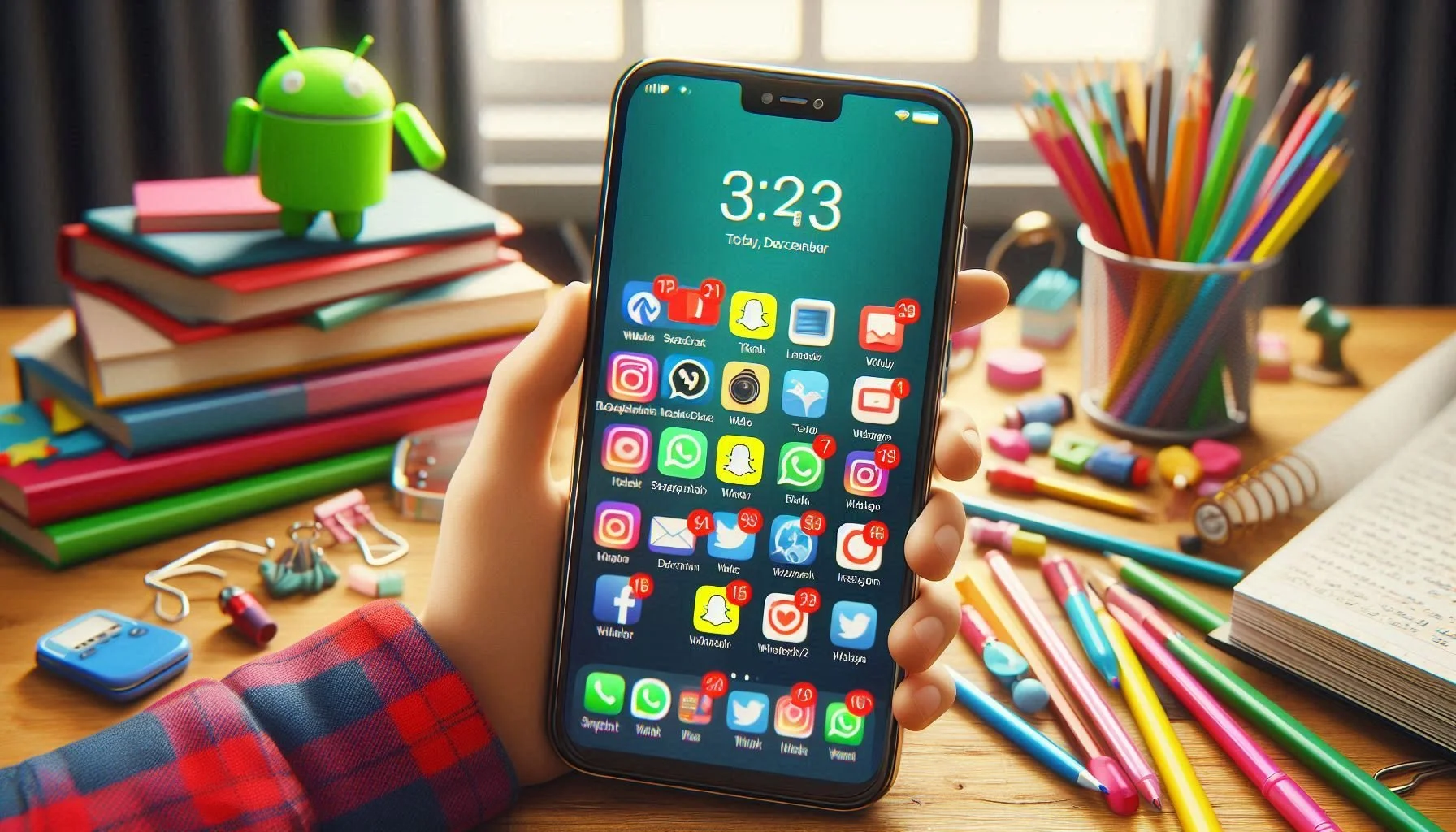
Imagine your child sitting down to revise. Their books are open, their laptop is ready and they've got an hour to get some work done. Their phone is sitting beside them, but they aren't actually using it. It's not ringing, nobody has sent them a message and they're not scrolling through social media. So surely it isn't a problem?
Actually, it might be. The problem isn't only what your child is doing on their phone. It's the fact that their phone is competing for their attention while they're trying to learn.
Your attention is limited
When we're concentrating on something, we'd like to think that our brains can simply ignore everything else around us. Unfortunately, it doesn't quite work like that. Our attention is constantly being pulled towards things that might be interesting, important or rewarding. That's useful when we're crossing a road or listening for our name, but it isn't particularly helpful when we're trying to learn something difficult.
A phone is especially good at grabbing attention. A notification appears, the screen lights up, someone sends a message or an app has something new to show us. Even if your child doesn't pick the phone up, part of their attention can be occupied by the possibility that something might be happening on it. And if they do pick it up "just for a minute", that minute can easily become ten.
The problem isn't just screen time
We often talk about children's phones in terms of how much time they spend on them. That's important, but when it comes to studying, there is another question worth asking: what is the phone doing to their attention while they are trying to learn?
Your child might spend 45 minutes sitting at their desk and technically only spend five minutes looking at their phone, but those interruptions still matter. Every time they switch away from what they're learning, they have to find their way back into the task. They need to remember what they were doing, where they had got to and what they were thinking about, and that takes mental effort. If it happens repeatedly, a study session can become a strange cycle of starting, stopping and starting again.
Try this yourself
You don't have to take my word for it. The next time you're doing something that requires concentration, put your own phone beside you and don't touch it. Just leave it there and imagine that every few minutes it might buzz. You don't know when, you don't know whether the message will be interesting and you don't know who it might be from. How easy is it to ignore? Now put the phone in another room and try the same task for the same amount of time. It probably feels different, because removing a distraction is often easier than trying to resist one.
This is something worth remembering when we talk about children's self-control. Of course, children need to develop the ability to manage their own attention, but we can also make that job easier by changing the environment around them. There is no particular virtue in making learning unnecessarily difficult.
Make the distraction harder to reach
This is where parents can make a surprisingly simple difference. If your child doesn't need their phone for the work they're doing, suggest putting it somewhere else while they study. It could go upstairs, into another room or simply somewhere out of reach. The exact location doesn't matter; the principle is simple: make the distraction harder to access.
If your child does need their phone for something they're studying, that's different. They might need to use it for a calculator, research, an app or communication with school, so the aim isn't to remove the device completely. Instead, notifications can be switched off, unnecessary apps can be closed and the phone can be placed further away when it isn't needed. Small changes can make a big difference.
Don't turn it into a battle
Of course, this is where things can become difficult. If you've ever asked your child to put their phone away, you'll know that it isn't always met with enthusiastic applause. That's understandable because phones are not simply pieces of technology anymore. They are how young people communicate with friends, entertain themselves, find information and stay connected to the world around them.
So rather than making the conversation about “phones are bad”, try making it about “how can we make studying easier?" You could even experiment together. Ask your child to do 30 minutes of study with their phone beside them, then try another 30 minutes with it somewhere else, and ask which session felt easier. You're not telling them what to think; you're helping them notice the effect that their environment has on their own concentration.
Create periods of protected attention
Your child doesn't need to spend every waking hour completely disconnected from their phone. The aim is to create some periods where they can concentrate without being constantly interrupted. It could be 25 minutes of focused study followed by a short break, or it could be 40 minutes. The exact length matters less than the principle.
When your child is studying, give their attention a chance to stay on the thing they're trying to learn.
Once the study period is finished, they can check their messages, have a look at social media or respond to whatever has arrived. This can also make the phone feel less like something that has been taken away from them and more like something they have deliberately chosen to put aside while they concentrate.
Help them develop the habit
Ultimately, your goal isn't to manage your child's phone forever. As children get older, they need to become increasingly capable of managing their own attention. That means helping them understand why the phone can be distracting, rather than simply imposing rules.
You can ask questions such as, "Do you find it easier to concentrate when your phone is in another room?" or "How often do you think you check it while you're studying?" You might even ask, "What could you do to make it easier to focus for half an hour?" These questions gradually shift the responsibility towards your child. You're still providing support, but you're also helping them develop something they'll need long after they've left school: the ability to protect their own attention.
The easiest distraction to resist is the one that isn't there
We sometimes think that good concentration means being able to ignore distractions. But there is a simpler approach: remove the distractions you can. If the television is on, switch it off. If messages are constantly appearing on a laptop, close the tabs. If the phone isn't needed, put it somewhere else.
Your child will still need to develop the ability to concentrate when distractions are unavoidable, but there's no prize for making learning harder than it needs to be. So the next time your child sits down to study, don't just ask whether they're working. Look at what's competing for their attention.
Because sometimes the best way to help your child concentrate isn't to tell them to try harder. It's to give their attention less to fight against.
