
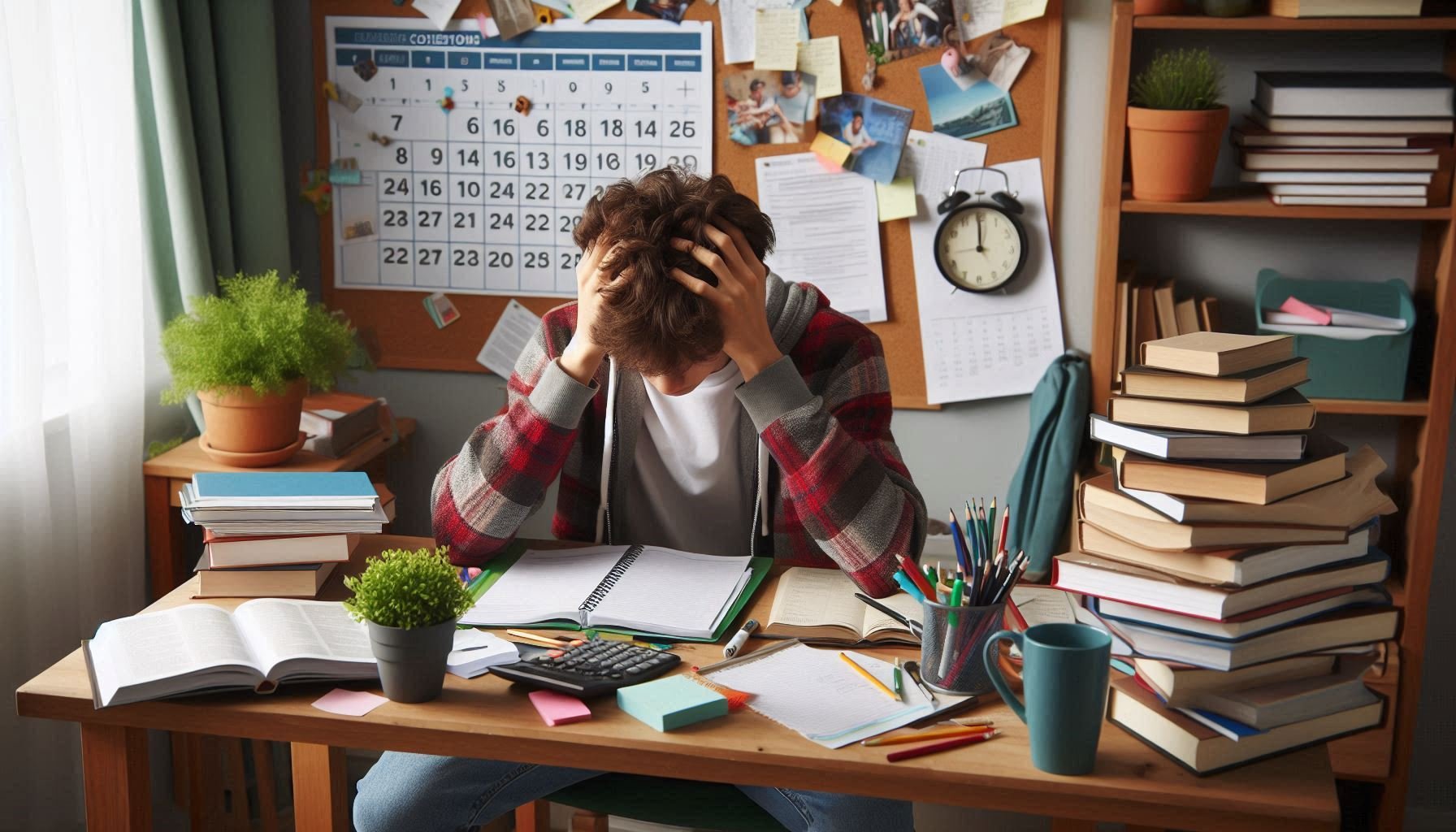
When your child has an important exam coming up, it is natural for them to feel nervous. Their heart might start beating faster, their palms might become sweaty and they might suddenly become very aware of every little thing that is happening around them.
As parents, our instinct can be to try to make those feelings disappear. We might tell them not to worry, reassure them that everything will be fine or encourage them to relax. And of course, if a child is genuinely overwhelmed by anxiety, they need support. But there is another way of looking at those familiar feelings of nervousness that can be surprisingly helpful. Feeling nervous doesn't necessarily mean something is going wrong. Sometimes it means your body is getting ready to help you.
Your body is preparing for something important
When we experience pressure, our bodies respond automatically. Our heart rate increases, our breathing can change, we may sweat more and we can become more alert to what is happening around us. These responses are part of the body's natural stress response. The increased heart rate helps move blood and oxygen around the body, while sweating helps regulate our temperature. We can also become more alert and focused because our body is preparing us to respond to something it considers important.
Your child doesn't need to know the biology behind all of this. But understanding that these physical sensations are normal responses to pressure can make a surprisingly big difference. If their heart starts racing before an exam, they don't necessarily need to think, "I'm panicking." They can think, "My body knows this matters and it's getting me ready." The physical sensation hasn't changed. What has changed is what they think it means.
The story we tell ourselves matters
Imagine two students sitting outside an exam room. Both have a racing heart. Both have sweaty palms. Both feel butterflies in their stomach. The first thinks, "I'm really nervous. My heart is racing. I'm going to forget everything." The second thinks, "I'm feeling nervous because this matters to me. My body is getting me ready to concentrate." They are experiencing very similar physical sensations, but they are interpreting them differently.
That doesn't mean that simply changing your thoughts will magically remove anxiety or guarantee a good exam result. It won't. But helping children understand that feeling nervous isn't automatically a sign that they are going to perform badly can stop the physical response itself becoming another source of worry. Instead of becoming frightened by the feeling, they can learn to recognise it.
A little activation can be useful
We often talk about wanting children to feel calm before an exam. And being excessively anxious certainly isn't helpful. But calm isn't the only useful state to be in. Imagine the opposite. Your child walks into an important exam feeling completely disengaged. They aren't particularly bothered about the result. They aren't especially alert to the questions in front of them. They don't feel any urgency to manage their time carefully or check their answers. That isn't necessarily an ideal state either.
A certain level of activation can help us become more attentive to what we're doing. Your child might read a question more carefully, notice an important word, become more conscious of how much time they have left or be more inclined to check an answer before moving on.The aim isn't to make your child stressed. It's to recognise that being alert and invested in something isn't necessarily a bad thing.
You can use the feeling
This is where the idea becomes particularly useful for children. Rather than trying to get rid of every feeling of nervousness, encourage your child to notice what is happening and use it as a reminder to focus.
Their heart is beating faster? That's okay. Take a breath and concentrate on the question.
Feeling a little sweaty? That's okay. Their body is regulating itself.
Feeling butterflies? That's okay. They're aware that something important is happening.
Feeling very alert? Use it. Read the question carefully and think before you start writing.
The aim is not to pretend that they aren't nervous. It's to stop nervousness becoming the thing they are thinking about.
Parents can change the conversation
This is where parents can make a real difference. If your child says, "I'm so nervous about tomorrow," it is tempting to respond with, "Don't worry." But your child knows they are worried, so telling them not to be can sometimes make them feel as though they shouldn't be experiencing those emotions. Instead, you might say something like, "It's completely normal to feel nervous when something matters to you. Your body is getting you ready. Let's think about what you can do with that feeling." That small change in language can help your child see their nerves as something they can manage rather than something they need to eliminate.
You can also talk about what happens physically. If they notice their heart beating faster, explain that their body is increasing its activity because it is preparing for a challenge. If they feel hot or sweaty, explain that their body is regulating its temperature. None of this needs to become a science lesson. It is simply about helping your child understand that their body isn't working against them.
This doesn't mean all stress is helpful
There is an important distinction here. A little nervousness before an exam can be perfectly normal and may help someone feel alert and ready. But too much anxiety can make it much harder to concentrate, retrieve information and think clearly. If your child is experiencing severe or persistent exam anxiety, the answer isn't simply to tell them to think positively about it. They may need additional support from school, home or an appropriate professional.
The message here is much simpler: don't assume that every feeling of nervousness is a problem that needs to be removed. Sometimes it is just your body's normal response to something that matters.
Help your child prepare for the feeling
One of the best times to have this conversation is before the exam itself. If you wait until your child is sitting outside the exam room with their heart racing, it can be much harder to introduce a completely new way of thinking. Talk about it beforehand. Ask them what they think they might feel like when they are waiting to go into the exam. Explain that they might feel their heart beating faster or notice that they are more alert. Tell them that this is normal and that they don't need to be frightened by it.
You could even agree on a simple phrase they can use when the nerves arrive. "My body is getting me ready." It gives them something useful to think about instead of simply telling themselves to calm down.
The goal isn't to remove every nerve
We sometimes give children the impression that successful people don't get nervous. They do. The person giving a presentation, playing in a cup final, performing on stage or sitting an important exam may all experience exactly the same physical sensations. The difference isn't necessarily whether they feel nervous. It can be how they interpret those feelings and what they do next. Your child doesn't need to walk into an exam feeling completely relaxed. They need to be able to recognise their nerves, understand what is happening and then focus their attention on the task in front of them. That is a much more realistic goal.
Don't fear the feeling
Perhaps the most useful thing you can teach your child is that they don't have to be frightened by their own body's response to pressure. Their heart might race. Their palms might sweat. They might feel butterflies in their stomach. That's okay. Those sensations don't tell them how well they're going to perform. They don't mean they're going to forget everything they've learned. They are simply signs that their body knows something important is happening.
So rather than always saying, "Don't be nervous," try something different. "It's okay to feel nervous. Your body is getting you ready. Now use that feeling to focus." You can't always control how your body responds to pressure. But you can learn to change what that response means to you.
