
Open or closed? Rethinking the classroom door
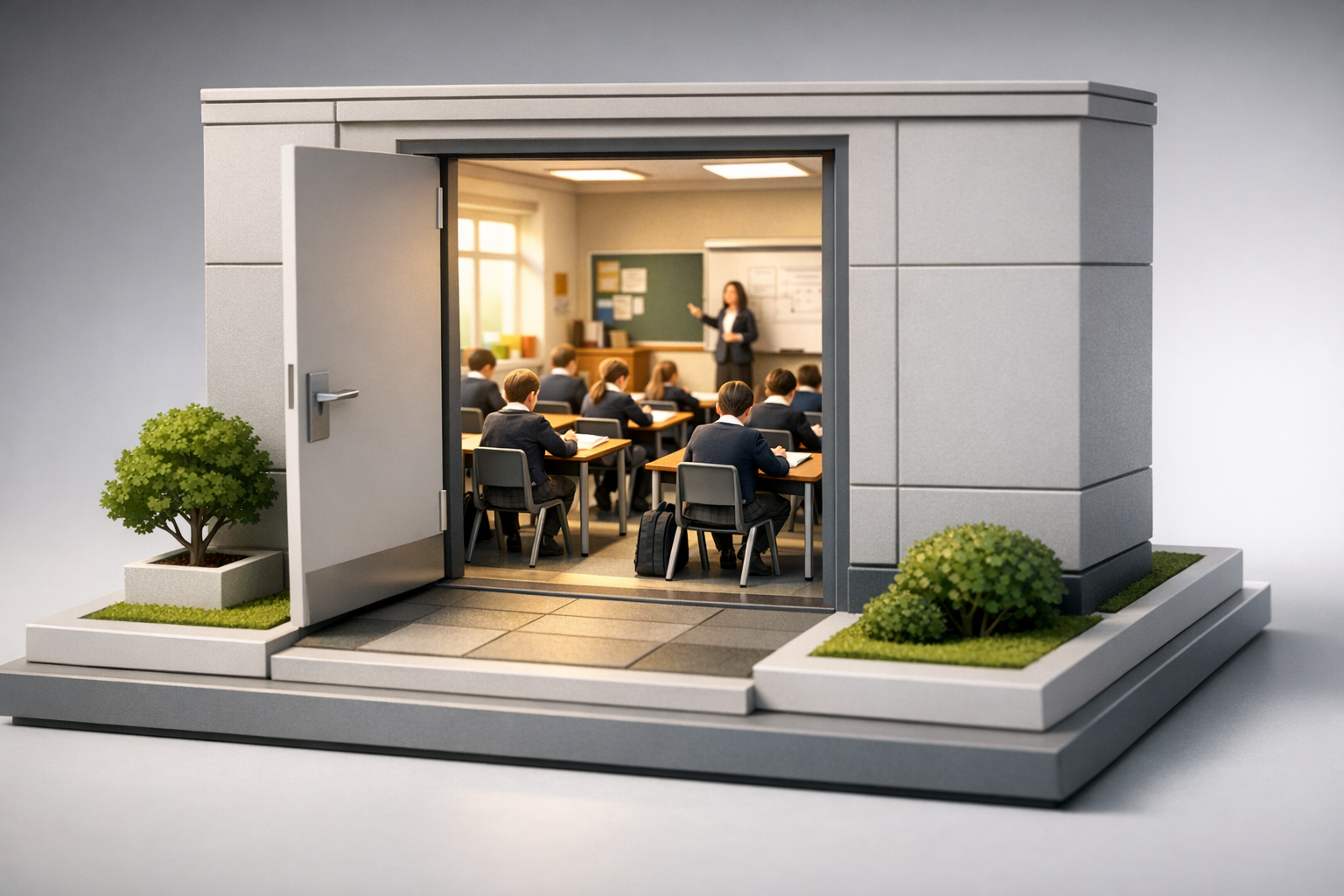
At one point in time, nearly every teacher worked behind a closed classroom door. This was not merely a matter of tradition but a deliberate choice rooted in a desire for privacy and control. The closed door represented a protective bubble - a place where teachers could work undisturbed and without any interruptions. Many teachers deliberately shut their classroom doors (some even went as far as to place posters on the glass panels) in an effort to guard their teaching methods and escape the prying eyes of senior leaders and fellow colleagues. In these moments, the classroom was not only a clear boundary between professional practice and the busyness of the school environment, but also a safe place where innovative teaching strategies could be explored without fear of being prematurely judged by colleagues and senior staff.
For the students, the closed door signalled entry into a dedicated learning space. Once you step inside, you leave the distractions behind. Yet this privacy, while offering quiet and focus, also risked isolating a teacher from the broader professional community. The closed door meant that opportunities for spontaneous collaboration, peer observation, or shared innovation were significantly diminished.
The rise of the open door
More recently, there has been a cultural shift when it comes to classroom doors and many teachers have embraced the open-door policy as a means of breaking down the silos that once defined school life. The simple act of opening the classroom door has now become a badge of pride for some teachers. An open door communicates a visual invitation to a senior leader or a teaching colleague to step inside, reinforcing a spirit of openness and professional dialogue. By communicating the message “come in and see what we’re doing here”, it has transformed the classroom from a once isolated space into a hub of shared ideas and mutual accountability.
The benefits also extend beyond professional transparency. When students witness their teachers welcoming ad-hoc drop-ins from colleagues, they are exposed to a culture of openness and mutual respect. Students begin to see that learning is not a solitary endeavour but a collaborative journey where shared expertise and feedback amongst professionals can improve the educational experience for everyone.
But as our schools evolve, we must ask ourselves: is an open-door policy always in the best interests of our students, or might the benefits of a closed door approach sometimes better serve the learning environment?
Weighing up the pros and cons: Open versus closed
Deciding between an open or closed door should not simply be a matter of personal preference or what a school leader might like to dictate. Each separate approach influences both teaching and learning in distinct ways. Let’s examine the strengths and weaknesses of each strategy.
Advantages of an open door
Encouraging transparency and collaboration: An open door policy actively supports professional learning communities. When teachers invite colleagues into their classrooms, they create a natural opportunity to share teaching techniques, discussing lessons and reflecting on practice. This casual form of peer observation can lead to rapid improvements in pedagogy and classroom craft.
Building an inclusive, welcoming environment: An open door extends an unspoken welcome to visitors. This approach breaks down hierarchical boundaries and develops an atmosphere of trust and openness. Students, in turn, see the teaching profession as collaborative and approachable.
Minimising disruption when welcoming visitors: With the door already open, the arrival of a visitor is less disruptive. There is no need for the class to stop suddenly as someone opens a closed door. Instead, arrivals can be more fluid.
Disadvantages of an open door
Increased risk of distractions: Open classroom doors allow for a variety of interruptions. Noise from bustling corridors, on-call radios, movement on the corridors and noise from nearby classrooms can all contribute to an environment that is not conducive to learning. In a place where quiet is required for deep thinking and concentration, even the smallest of distractions can take students out of their state of flow.
Cognitive overload: Cognitive load theory tells us that our short-term working memory has limited capacity. When extraneous noise or movement enters the classroom, students must expend valuable cognitive resources to filter out distractions, leaving less working memory available for processing new information. For lots of students this can make it more difficult for them and can significantly impair their ability to focus on complex tasks, particularly when they are engaged in tasks that demand high levels of concentration.
Advantages of a closed door
Creating a quiet and focused environment: A closed door creates a physical boundary that significantly reduces external sensory input. When distractions are minimised, students can immerse themselves in deep thinking and focused work, often in periods of complete silence.
Controlling the learning space: By closing the door, teachers delineate a clear space for learning. This separation signals to students that the classroom is a place of concentration and structured activity. It reinforces classroom routines and expectations, helping to minimise off-task behaviour.
Disadvantages of a closed door
Risk of isolating the teacher: While a closed door might create and maintain a focused learning environment, it also risks isolating the teacher. The subconscious culture that a closed door transmits makes it harder for opportunities of informal peer observation and collaboration to happen, meaning teachers may miss the chance to learn new techniques or benefit from the insights of their colleagues.
Disruptions when entry is required: Though a closed door minimises external noise during lessons, it also means that any break in that barrier (to potentially welcome a colleague) requires a physical interruption. Opening a closed door invites movement, curiosity and conversation that can unsettle students from their deep thinking and focus, making it harder for the teacher to get them back on task.
Strategic door management
Given these varied advantages and disadvantages, the decision to keep the door open or closed does not need to be an either/or proposition. Instead, you should be able to view the classroom door as a tool - one that you can use to help you create the optimal learning environment.
Therefore, the question is not so much whether one method is inherently better than the other, but rather how each approach aligns with the specific conditions that you are trying to create in that specific moment in the classroom. Rather than simply adopting a school-wide mandate or taking pride in your ‘open-door’ status, it is important for you to reflect on the impact that your environmental choices have on student engagement and concentration.
Every day, the differing nature of classroom activities across multiple subjects and year groups means that different moments call for different conditions. If a lesson is structured around collaborative activities and group work, then an open door might be ideal to signal a welcoming classroom environment. Conversely, if the lesson requires students to engage in a sustained period of silent focus, a closed door can serve as a crucial buffer against the sensory overload that might lie beyond the classroom door.
When deciding on a door policy, consider the following reflective questions:
What is the primary purpose of today's lesson? Does the activity require quiet concentration, or is it interactive and collaborative?
How are the immediate surroundings likely to impact students? Are there noisy corridors, ongoing school events, or adjacent classes taking part in classroom activities that might distract the attention of my students?
What is my classroom management like with this particular class? Do I feel that a controlled and quiet environment better supports my teaching with this class?
Your choice of whether to leave the door open or closed need not be fixed. It should be a dynamic decision that can evolve throughout each lesson. By consciously thinking about when to invite the openness of the corridor to stimulate professional dialogue and when to protect your classroom as a sanctuary of uninterrupted deep thinking, you empower yourself to create a balanced and adaptive learning environment that is mindful of the cognitive demands on young learners. Whether your door stands open as a beacon of inclusive education or closed as a protective shield against distraction, the key lies in being intentional with your decision.
