
Thinking First: Why Silence Matters in Learning
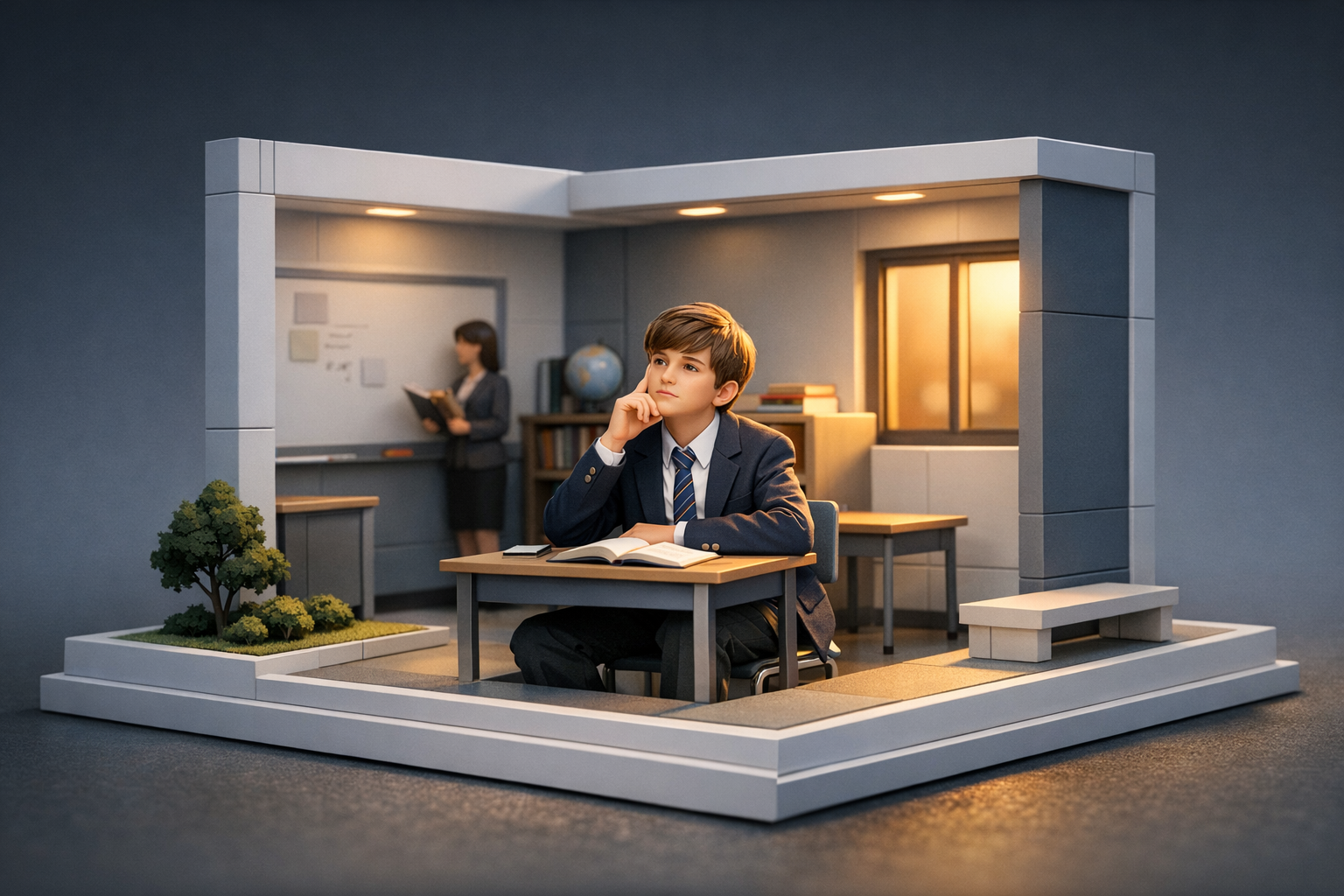
Over recent weeks, I’ve visited dozens of classrooms and noticed something that’s becoming increasingly common. Teachers are rightly encouraging children to ‘turn and talk’ or to ‘think, pair, share’, but in many cases, the first stage of thinking silently has disappeared. Instead of Think, Pair, Share, what we often see is simply Pair and Share.
The problem? Many children are talking without first thinking. I’ve watched pupils turn to their partner and say, “What do you think?” before they’ve even begun to form a view of their own. They’re not avoiding learning on purpose, they just haven’t been trained to value the pause before the talk.
But without thinking, there’s nothing worth sharing.
Why thinking must come first
Daniel Willingham’s famous line — “Memory is the residue of thought” — captures this perfectly. If our pupils aren’t thinking, they’re not learning. And thinking takes time, space, and, crucially, silence.
In the current educational landscape, there’s a welcome focus on oracy and the importance of talk in the classroom. The Department for Education’s emphasis on developing confident communicators is a step in the right direction. However, there’s a risk that schools interpret ‘more talk’ as simply ‘more noise’. True oracy isn’t about constant conversation, it’s about high-quality discussion that stems from well-formed thinking.
Talk should be the product of thought, not the substitute for it.
Before children can articulate ideas clearly, they must first construct and organise those ideas internally. Thinking is the rehearsal space for speech - it’s where pupils connect prior knowledge, make sense of information, and mentally structure what they want to say. Without that silent rehearsal, talk becomes shallow, repetitive, and reliant on others’ ideas.
When we give children time to think silently before they speak, we strengthen the quality of classroom dialogue. Their responses become more considered, their reasoning more coherent, and their use of language more precise. The link between thinking and oracy is therefore not a one-way process. Thought gives rise to talk, and talk, in turn, strengthens and refines thought.
The power of silence
Silence in a classroom is not the absence of learning; it’s often the evidence of it. Those quiet moments when pupils are mulling over a question, forming their reasoning, and wrestling with ideas are the very moments where the deepest learning happens.
We must normalise silence as an essential part of the learning process. For many pupils (and some teachers) silence feels uncomfortable. We rush to fill the void with conversation, noise, or hints. But if we can establish a culture where silence is valued and purposeful, pupils begin to recognise that learning isn’t about being quick, it’s about being thoughtful.
A minute of silent thinking time before any partner discussion, written response, or class feedback can transform the quality of contributions. In those short moments, pupils prepare ideas, retrieve knowledge, make connections, and consider alternatives. Then, when the talk begins, it’s richer, more reasoned, and far more meaningful.
Silence also plays a crucial role in building equity in the classroom. Without it, only the fastest and most confident pupils dominate discussions. The quieter voices and those who need more time to process are left unheard. By embedding silent thinking before talk, we create a culture where every child has the opportunity to form and share a response. Thinking time ensures all pupils participate, not just the loudest.
Practical strategies for building thinking time
1. Silent Start
Before beginning any activity, display a timer and ask pupils to spend one minute thinking silently about the question or task ahead. Model what you expect this to look like: eyes on the question, jotting down notes, or visualising their response. Protect this silence fiercely. Over time, pupils will come to value it.
2. Silent Focus
Designate a period of silent focus time for children to complete a task entirely on their own, without any verbal interaction or reminders. This might last just a few minutes, but it should be truly silent - including from the teacher. The aim is for pupils to experience uninterrupted thinking flow, where the ideas, reasoning, and work produced are entirely their own. Resist the temptation to punctuate the silence with verbal prompts or instructions. Let the thinking breathe.
3. Wait Time
Once you’ve asked a question, pause before choosing who answers it. This wait time, even just a few seconds, gives every pupil the chance to think rather than simply rely on others. The research is clear: increasing wait time not only improves the quality and length of answers but also how well pupils can articulate them. It sends a powerful message that deep thinking, not quick guessing, is what matters.
The teacher’s role in modelling thinking
If we want pupils to think deeply, we have to show them what that looks like. Thinking is often invisible, so we need to make it visible through our own behaviour. When a pupil asks a question, pause deliberately before answering. Narrate your own thinking aloud: “Let me just think about that for a moment.”
Model what productive silence looks like: taking notes, sketching an idea, or re-reading a question before responding. When pupils see adults valuing the process of thinking, they begin to mirror it themselves. Over time, this shapes a classroom culture where pausing to think isn’t hesitation, it’s evidence of depth.
The value of struggle
Deep thinking and productive struggle go hand in hand. When pupils find something challenging (when they have to think hard to find a way forward) that’s when learning sticks. Struggle isn’t a sign of failure; it’s a sign that the level of challenge is just right.
We should be talking openly with pupils about this. Tell them that we want them to experience moments of struggle because that’s where the brain grows. When children realise that feeling stuck is part of learning, not a reason to give up, they become more resilient thinkers.
To support this:
Celebrate ‘productive struggle’ in your praise language.
Model your own thinking aloud when you get stuck.
Reinforce that the goal isn’t speed of thought, but depth.
Reclaiming the Silence
Thinking is the foundation of learning, memory, and understanding. When we rush pupils into talking or writing before they’ve had the chance to think, we rob them of the most important part of the process.
So let’s reclaim the silence. Let’s make quiet classrooms a mark of depth, not disengagement. Let’s build in the pauses, the struggles, and the moments where pupils truly think for themselves - because, as Willingham reminds us, memory is the residue of thought. So if they’re not thinking, they’re not learning.
