
Watching Feedback in Action
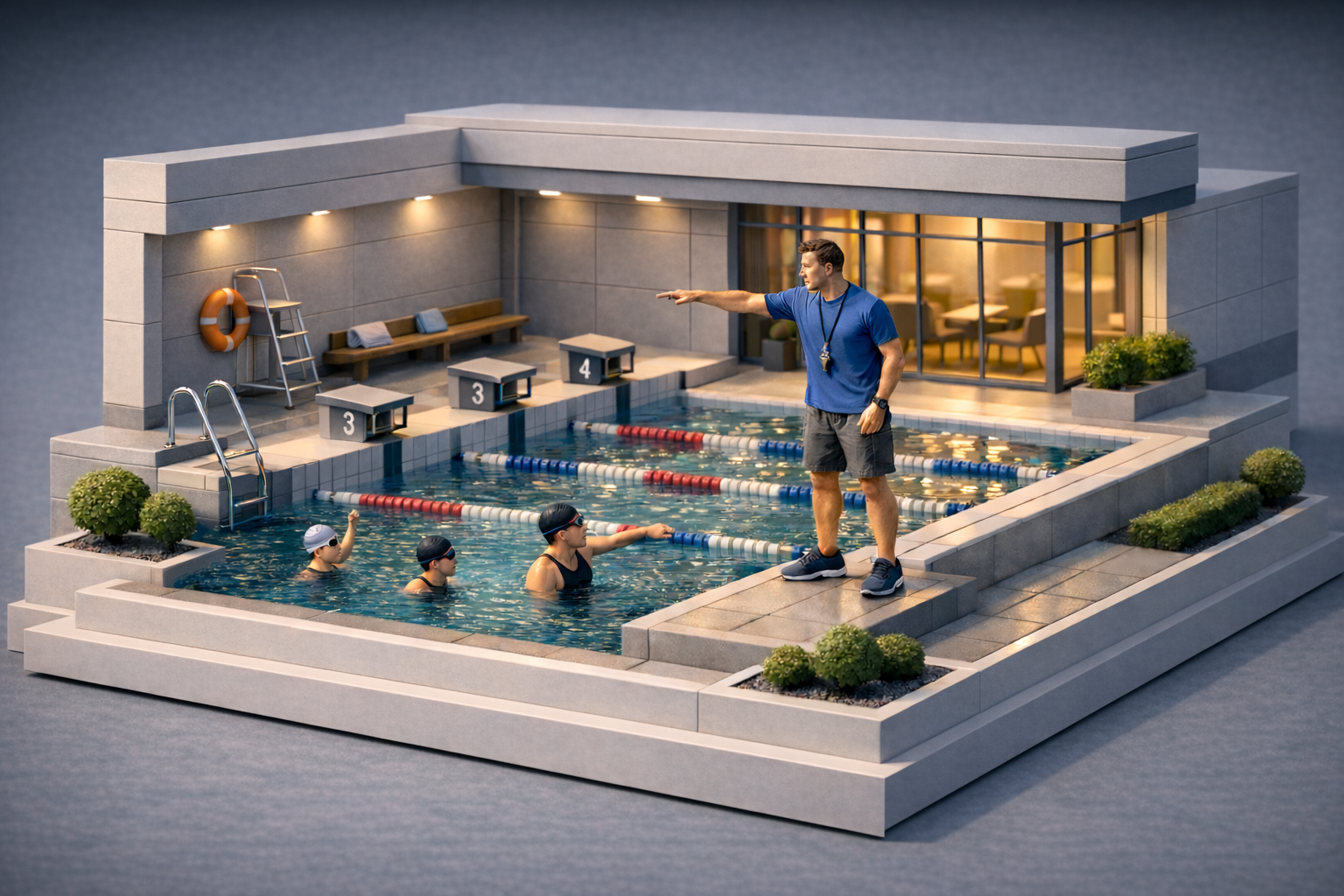
I recently found myself sitting at the side of a local swimming pool and ended up watching a swimming lesson taking place in the next lane. A group of young children were working on their breaststroke with a coach who clearly knew his craft. What struck me first was the clarity of his instructions. Before the children even got in the water, he demonstrated the stroke, showing them not just what good technique looked like but also what it didn’t look like. The children watched closely, copying the arm movement and body position before they pushed off the wall, absorbing every small detail. Then the real coaching began.
Every few minutes the coach intervened. Sometimes he stopped the whole group, sometimes he pulled one swimmer aside. I noticed how he positioned himself when speaking to the children. Rather than towering over them from the poolside, he bent down so he was at their level, speaking quietly and directly. It was a small detail, but a powerful reminder that effective feedback is not just about what we say, but how we say it. His feedback was brief and incredibly precise. A quick adjustment to the arm movement, a reminder about where the head should be positioned, a demonstration of how the kick should come from the hips rather than the knees. And each time, the swimmers tried again straight away. You could see the difference almost instantly: a slightly smoother stroke, a better glide through the water, small improvements happening in real time. Watching this, it reminded me of something we already know in education: feedback works best when it is timely, specific and something the learner can act on immediately.
Coaching and Teaching: More Alike Than You Think
In many ways, the work of a teacher and the work of a sports coach are remarkably similar. Both are trying to help someone improve their performance, and both rely on explanation, modelling, practice and feedback to move learning forward. Before moving fully into teaching, I spent a lot of time coaching sport and later worked as a PE teacher. In those environments, feedback was simply part of the makeup of the session. It happened constantly. Children would attempt a skill, receive a small piece of guidance and try again. There was never an expectation that feedback would come later.
Yet in classrooms the pattern can sometimes be different. Teachers often look at pupils’ work after the lesson and provide feedback in the next lesson, or even the following week. That approach is understandable. Teaching 30 pupils at once is very different from coaching a small group in a pool or on a field. But it is worth pausing for a moment and imagining how that would sound in a sports setting. Imagine the swimming coach saying, “I can see exactly how to improve your stroke, but I’m going to let you keep doing it wrong for the rest of this session. I’ll explain how to fix it next week.” Or perhaps, “I’ll give you some feedback on your breaststroke next time, although by then we’ll be moving on to front crawl.” In sport, that would feel strange. The whole point of feedback is to influence the next attempt. What was evident was that the swimming coach was not just setting off a swimming drill and then just monitoring it for completion, he was actively evaluating the performance of each and every swimmer, and intervening as soon as he saw something he could help them improve.
What Makes Feedback Effective
This is where the thinking of Dylan Wiliam is so helpful in sharpening our understanding of what feedback is really for. Wiliam often reminds us that “feedback should be more work for the recipient than the donor.” In other words, feedback is not about the teacher writing long explanations or delivering extended commentary. It is about giving learners something they can use. He also makes a second point that is even more powerful: “The only thing important about feedback is what the student does with it.” Watching the swimming lesson, those ideas came to life in a very simple way. The coach did not give lengthy speeches about technique. He offered short, focused cues that the children could act on immediately and then let them practise again so they could feel the difference for themselves. The learning happened in the water, not in the discussion.
Feedback Only Works if Pupils Can Act on It
One of the most striking aspects of the session was the speed with which improvement happened. The coach did not allow mistakes to drift on once he had spotted them. He intervened early and helped the swimmers adjust while the movement was still fresh in their minds. More importantly, he gave them another opportunity to try straight away. That is a crucial part of effective feedback. Pupils need time to do something with it. Without that opportunity, feedback becomes little more than commentary on work that has already finished. In classrooms, this might mean building in short moments for pupils to improve an answer, rewrite a sentence, adjust a method or attempt a problem again. The key idea is simple: feedback should shape the next attempt, not just evaluate the previous one.
The Role of Encouragement
Alongside the corrections and technical advice, the coach offered constant encouragement. When a swimmer improved their timing or produced a stronger kick, he noticed. When someone made progress after struggling, he said so. The atmosphere was positive and purposeful. The children were motivated because they could see themselves getting better. That blend of clarity, actionable feedback and encouragement created a powerful learning environment. This was another clear example of what Dylan Wiliam’s says about pupil’s motivation to act on feedback when he says that ‘students will only act on feedback if they believe they will get better’. In this case they could believe it because they could see and feel it immediately.
Looking Beyond the Classroom
Watching that swimming lesson was a useful reminder that the best teaching principles can often appear in other professions. In coaching environments, feedback sits within the session itself. The coach observes, offers a precise adjustment, models the improvement and the athlete tries again straight away. The cycle is quick, focused and purposeful. It is built on the understanding that improvement happens through immediate refinement of performance. The swimmers improved because the feedback came while they were still swimming. That simple observation left me wondering how often our pupils are given the same chance to improve while the learning is still taking place.
