
Two minutes is too long: Rethinking how we time classroom tasks
The power of a time limit
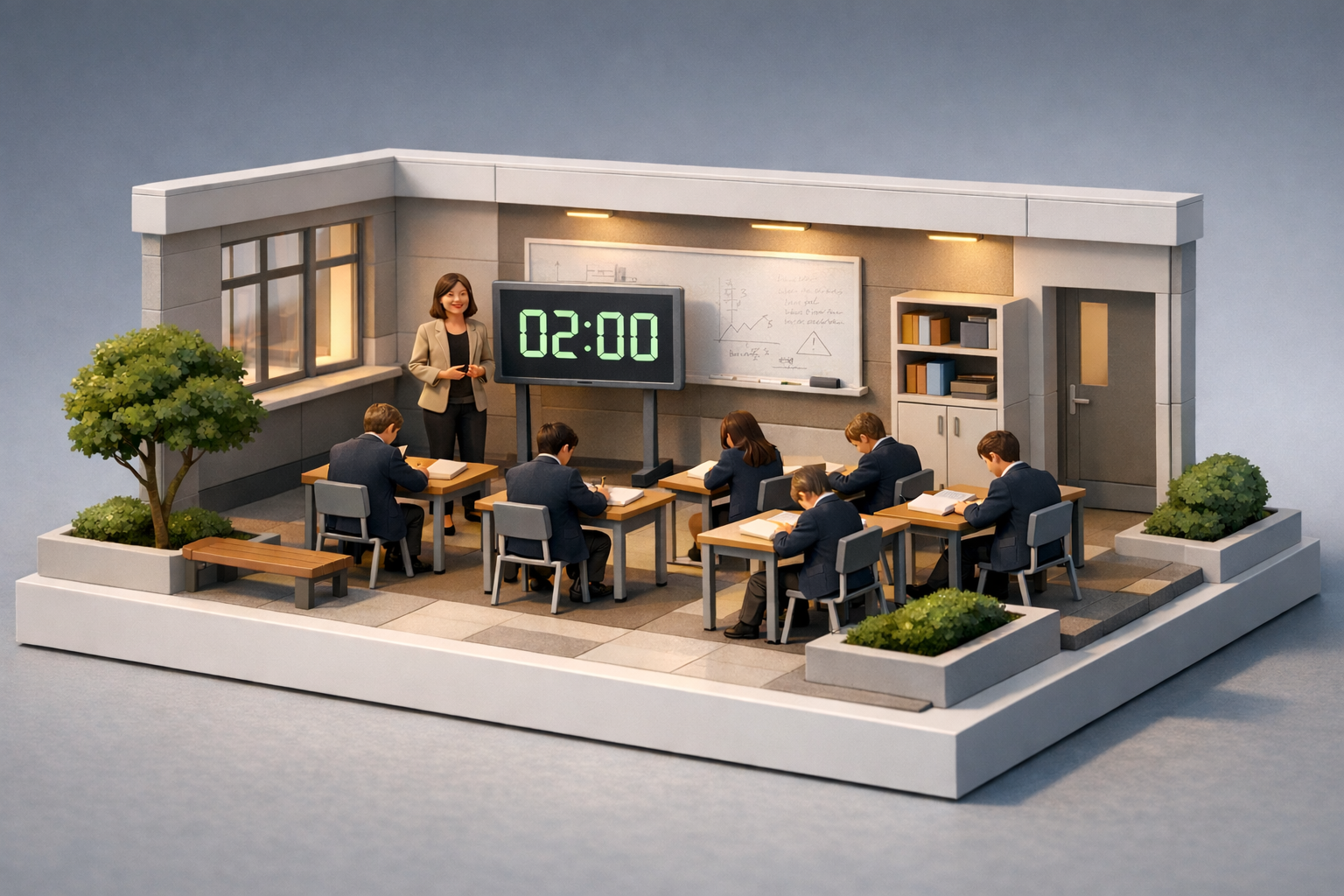
Most teachers understand the value of timing. Put a clear time limit around an activity and the pace changes almost immediately. The focus sharpens. Students move a little quicker, conversations become more purposeful and the energy of the task lifts. A simple countdown timer on the board can work wonders because it makes time visible and tangible. Students can see it ticking away and instinctively adjust their effort.
In an ideal world, every short activity would have a timer displayed for everyone to see. But in reality, that is not always practical. Sometimes the technology is not there, sometimes the moment does not lend itself to it, and sometimes we simply move on quickly from one activity to the next. When that happens, most of us fall back on the same approach - we set the time verbally.
We might say, “Right, you’ve got five minutes to complete this,” or “I’m going to give you two minutes to discuss this with your partner.” It’s that last phrase that’s worth pausing on for a moment. In classrooms up and down the country, teachers say “two minutes” countless times a day. On the surface it seems perfectly reasonable. Two minutes feels short enough to create urgency but long enough for students to get started. It is neat, simple and easy to say. The problem is that two minutes rarely means two minutes.
The problem with “two minutes”
Think about how often the phrase appears in everyday life. Someone says, “I’ll just be two minutes,” while finishing something off. A parent calls upstairs, “Come down in two minutes.” A colleague says they will meet you somewhere in two minutes. In reality, we all know that those two minutes can mean almost anything. It might be thirty seconds. It might be ten minutes. Occasionally it might actually be two.
Students grow up hearing this language all the time, so they quickly learn what it really means. “Two minutes” is not a precise measure of time. It is a loose expression that suggests something will happen soon, but not necessarily straight away. When that same phrase is used in the classroom, it carries the same ambiguity. The intention from the teacher is to create a short burst of focused work. The message many students hear is something slightly different. It sounds like a soft time limit, something that can stretch if needed.
When two minutes quietly becomes ten
If you spend time observing lessons, you begin to notice a pattern. A teacher might say, “Right, you’ve got two minutes to do this.” The task begins, but the clock is not really ticking. The activity runs on for a while, students continue working and eventually the teacher brings it to a close when it feels like most people have finished. In practice, those two minutes often become four, five or even ten. Not deliberately, but it simply happens because the time limit was never anchored to anything concrete.
Over time, students become very good at reading these signals. They realise that “two minutes” is not really a strict deadline. The activity will probably carry on until most people have finished or until the teacher decides it is time to move on. The result is subtle but noticeable. The pace of the room softens. The sense of urgency fades.
Changing the language changes the pace
One of the simplest ways to address this is to rethink the language we use when setting time limits. Instead of defaulting to two minutes, try choosing your timing deliberately and stating it with intention. For example, saying “I’m only going to give you three minutes for this” often lands very differently. Strangely enough, the phrase “only three minutes” can sound more challenging than “two minutes” because it feels purposeful and finite. Students hear that the time has been chosen for a reason.
Another useful shift is to move away from the familiar classroom blocks of five, ten or fifteen minutes. These have become the default timings in many lessons, but they can feel a little vague. They are what might be called comfortable times. Nobody feels particularly rushed and nobody feels particularly stretched. More specific timings tend to sharpen things up. Saying “You’ve got four minutes” or “You’ve got 90 seconds” immediately gives the task a different feel. It sounds deliberate rather than approximate.
The surprising impact of precision
Even the way we phrase the same amount of time can change how students respond. Telling a class they have “120 seconds” instead of “two minutes” might sound like a small difference, but it often has a noticeable effect. The language feels precise, almost scientific, and students react accordingly. Teachers who experiment with this often see the change straight away. Pens hit paper faster. Students lean into the task rather than easing into it. Conversations become sharper and more focused. It feels less like filling time and more like responding to a challenge.
Of course, none of this replaces the value of a visible countdown timer when one is available. A timer remains one of the clearest ways to communicate time limits because it removes any ambiguity. But when a timer is not there, the words we choose do far more work than we might realise.
A small shift that makes a big difference
Timing is not just about how long we give students to complete a task. It is about how clearly that time is framed and how seriously it is taken. When time limits feel vague, the pace of learning drifts with them. When they feel deliberate and precise, the atmosphere in the room changes.
That is why it may be worth pausing to reflect on one small phrase that has quietly become part of everyday classroom language. If “two minutes” has slipped into the habit category, it might be time to let it go. A slightly more thoughtful choice of words can bring a surprising amount of urgency and focus back into the room. Sometimes the smallest changes in language create the biggest shifts in classroom momentum.
